

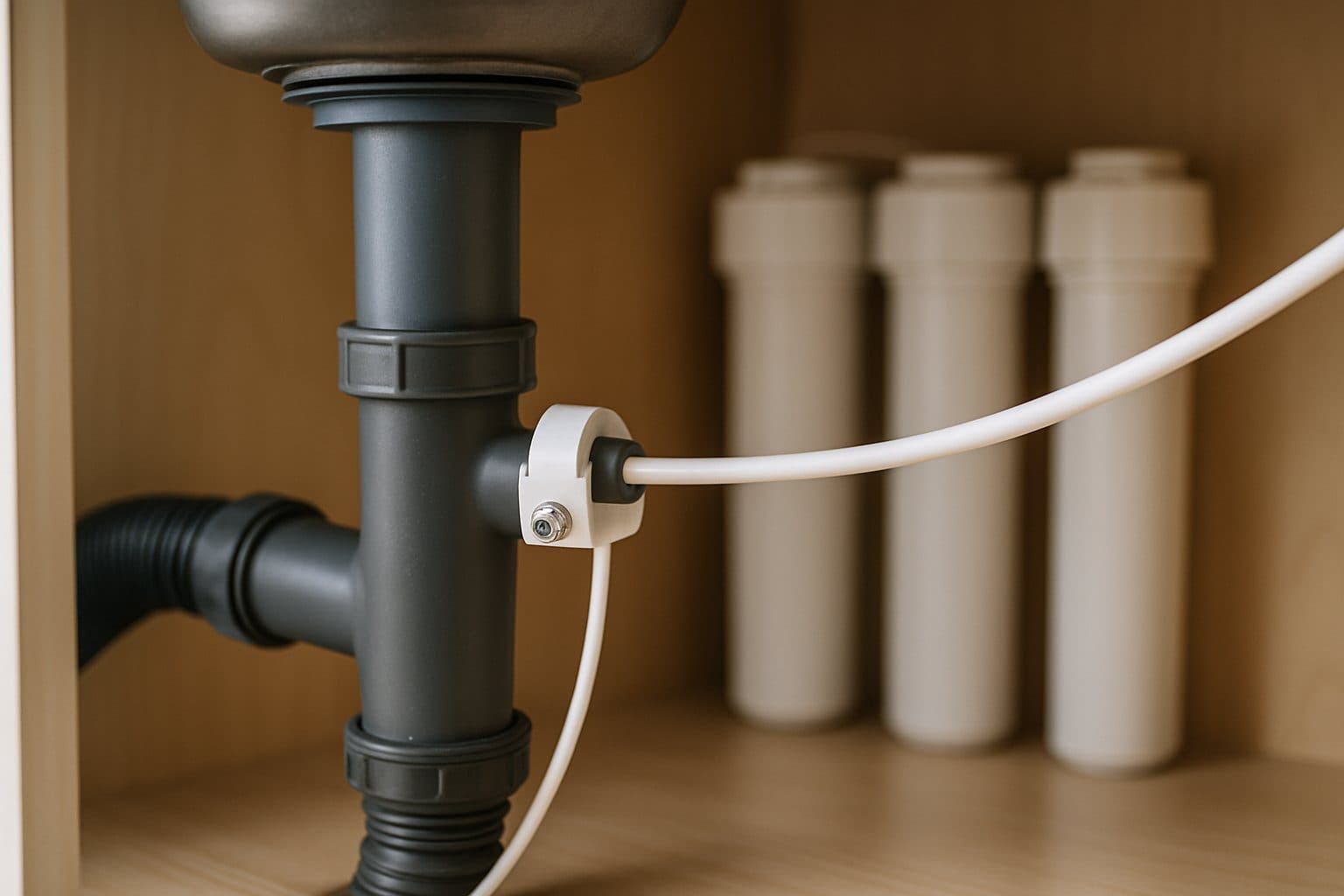
Every reverse osmosis system sends some water to the drain. How much is one of the more misrepresented numbers in the industry, in both directions.
Why there is a reject stream at all
An RO membrane separates water from dissolved solids by pushing it through under pressure. What passes is the product water. What does not pass — the rejected solids — has to leave, and it leaves carried by a flow of water.
Without that flow, the rejected material would accumulate against the membrane and foul it within days. The reject stream is not inefficiency; it is what keeps the membrane alive.
The realistic range
Older tank-style under-sink systems commonly run around 3 to 4 gallons to drain per gallon produced. Better-designed modern units improve on that considerably.
Two cautions about any published figure. It is measured under test conditions — a specified pressure, temperature and feed-water composition — which may not resemble your house. And the ratio moves over the life of the membrane.
What actually drives it
Incoming pressure, more than anything else. Membranes work by pressure. A system on weak supply pressure pushes less product through and sends more to drain, and this single variable can swing the ratio substantially. If a house has low pressure, that is worth knowing before choosing a unit rather than after.
Water temperature. Cold water is more viscous and passes less readily. The same system produces less in winter.
Dissolved solids in the feed. More to reject means more rejecting.
Membrane age and fouling. A membrane approaching the end of its life produces less and rejects more — and a rising waste ratio is a useful early warning that it is due, often before the taste changes.
The honest scale of it
For drinking and cooking water, the volumes are small in household terms. A family drinking a few gallons a day is sending perhaps ten or fifteen to the drain, against the hundreds a household uses for showers, laundry, toilets and the garden.
Where the argument becomes real is whole-house RO, where the reject stream scales with everything. That is almost never the right design for a residential property, and it is worth being sceptical of anyone proposing it. Treat the drinking line to drinking standard and the rest of the house to whatever it actually needs.
Reusing the reject
It is ordinary tap water carrying somewhat more dissolved solids than it started with — not contaminated. Some people plumb it to irrigation or a collection tank.
Two caveats. It is a real plumbing job, not a bucket under the sink. And whether it suits irrigation depends on what is in your water — concentrated dissolved solids on some plants and soils are not a favour.
The efficiency question that matters more
Whether you need RO on the whole house at all, and whether the thing you dislike about your water is even something RO addresses. Chlorine taste is a carbon question. Hardness is a softener question. RO earns its place on dissolved solids, nitrate, and contaminants that nothing else touches.
The free in-home test reads pressure-relevant conditions alongside the chemistry, which is what decides whether RO is the right tool and what ratio to expect.