
Daphne is Baldwin County's largest city, sitting on the bluffs above the eastern shore of Mobile Bay. The residential footprint runs from Olde Towne and Historic Malbis on the south up through Lake Forest — the city's largest planned community, developed in stages from the 1970s onward — out to the Highway 181 corridor where Jubilee Farms, Bellaton, and Sehoy represent the most recent wave of subdivision growth. Census data puts the median year built at 1995 across about 12,340 housing units, with 148 pre-1939 structures concentrated in Old Daphne and the French Settlement area.
Daphne Utilities serves roughly 11,051 water customers with about 6.5 MGD of production capacity, all from groundwater wells. Its 2026 water quality report, covering 2025 testing, lists hardness of 15.3 to 27.6 mg/L — about 0.9 to 1.6 grains per gallon, which the USGS classes as soft — and a pH of 6.4 to 6.9, slightly acidic at the low end. So on Daphne Utilities water, scale is rarely the reason to call; the slightly acidic pH (an acid-neutralizer question, not a softener one) and drinking-water quality at the kitchen tap come up more often. Hardness becomes the question for addresses on private wells or on the smaller systems around Lake Forest, the Hwy 181 corridor and the newer Spring Run blocks, where a single well can read well above the Baldwin County median of about 1.2 grains. The free in-home test is what decides whether a softener belongs in the plan.
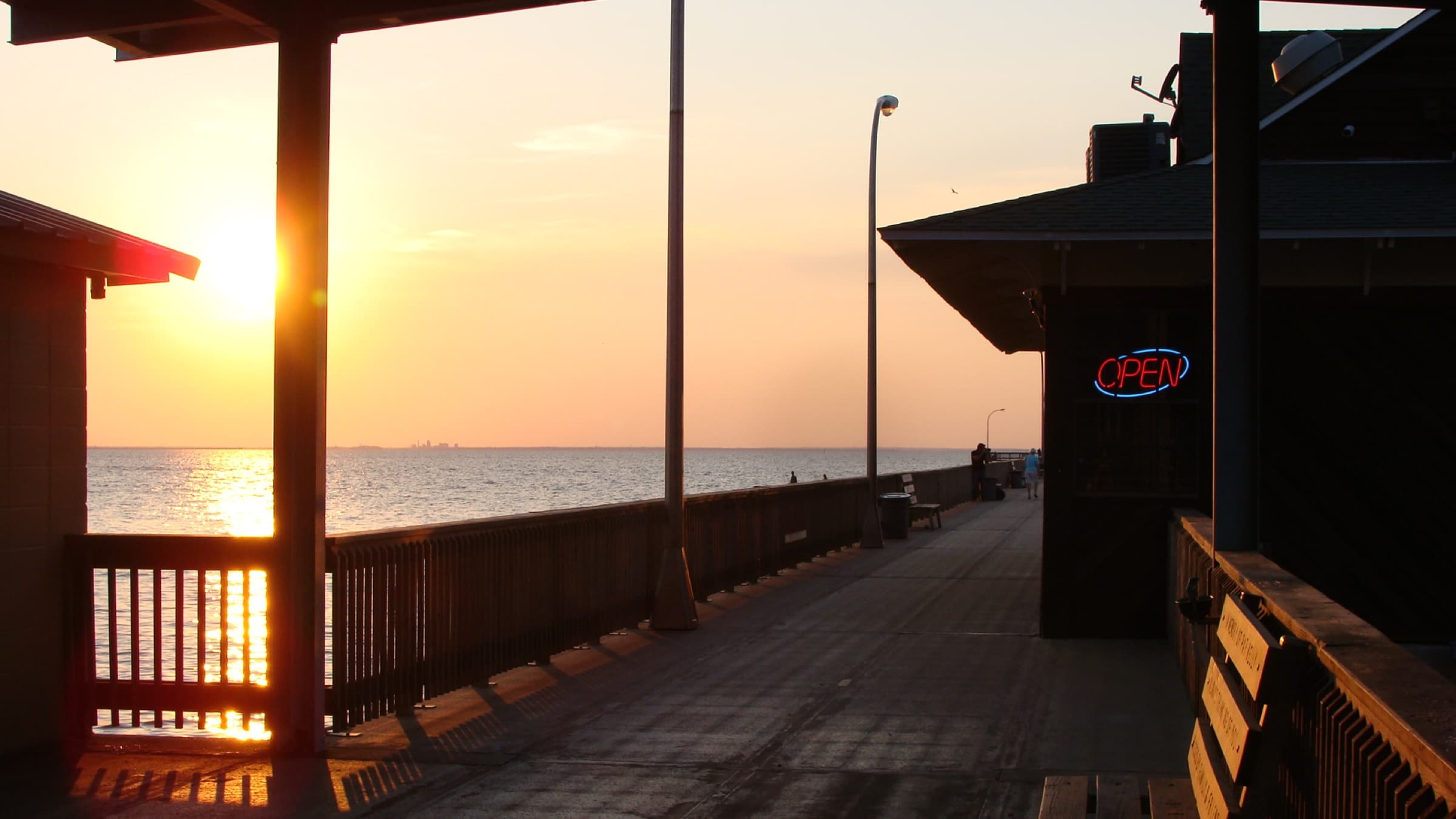
The bayfront edge is its own micro-case. Olde Towne Daphne and the bluff-top homes facing the bay deal with salt-laden humidity year-round, and the famous Mobile Bay "jubilee" — the unusual oxygen-depletion event that drives fish and crabs to the shoreline — is a reminder that this is an active, biologically-loaded estuary just below the houses. Equipment housings on bayfront installations want stainless or brass fittings rather than standard plated steel for service-life reasons.