

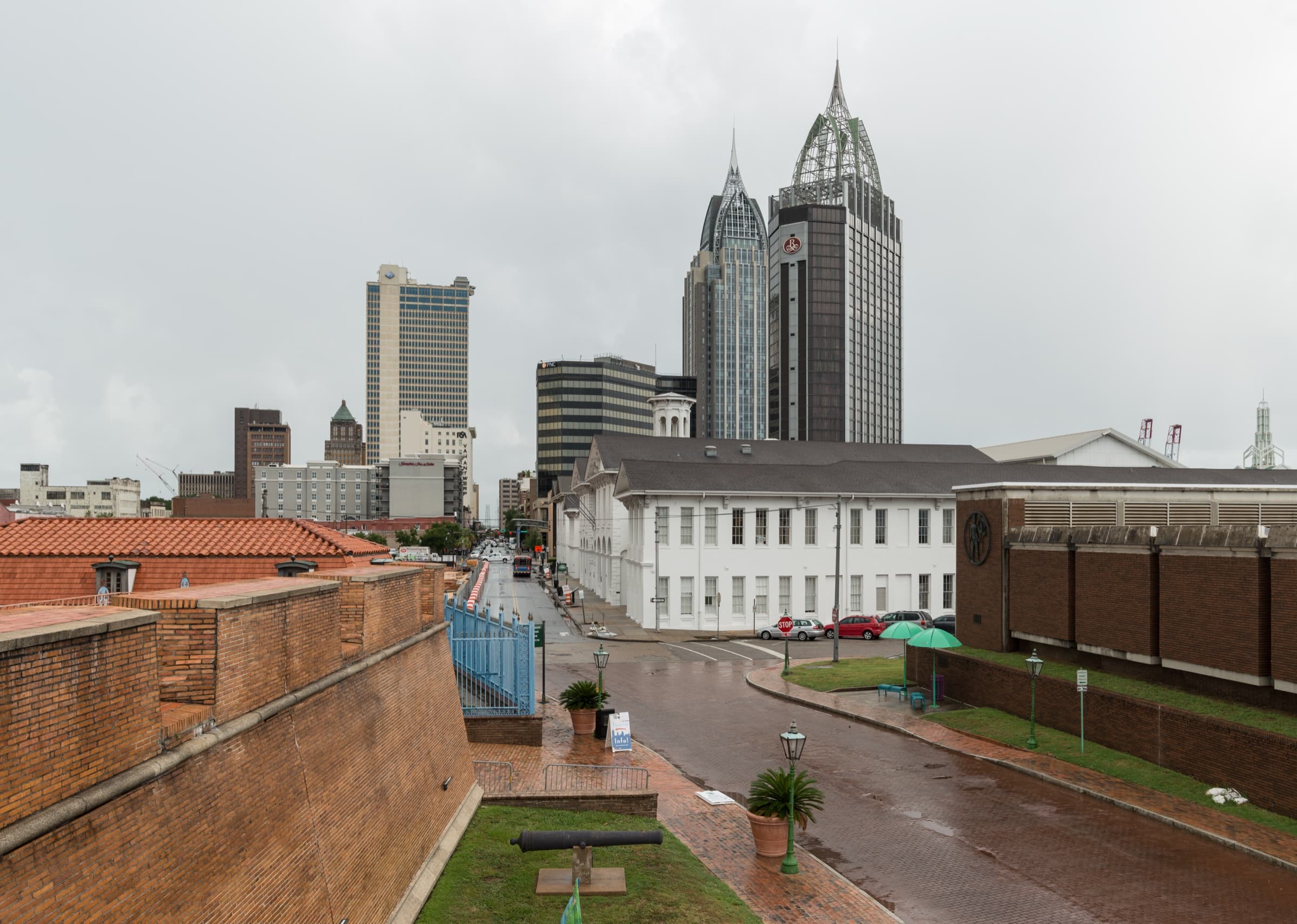
The city stretches from the De Tonti Square brick rowhouses on the river up through Oakleigh Garden, west across I-65 to the post-1980 subdivisions that now hold the bulk of the population. The Census Bureau puts the median year built across Mobile's ~96,000 housing units at 1976, with roughly 6,000 pre-1939 structures concentrated in Old Dauphin Way, Leinkauf, and Ashland Place. That bimodal stock — antebellum-to-WWII inside the loop, late-postwar to new-build outside it — is the single most important fact for sizing residential filtration here, because lead and galvanized service-line risk drops off sharply west of I-65.
MAWSS (Mobile Area Water and Sewer System) pulls from Big Creek Lake — also called Converse Reservoir — a surface impoundment in west Mobile County. Surface intakes carry post-storm turbidity that groundwater systems don't, and the published MAWSS Water Quality Report tracks that directly. After heavy rain events on the Escatawpa or in the Big Creek watershed, residents in Spring Hill and Midtown notice the chlorine-taste shift first because the utility has to push disinfection harder to compensate.
Mobile averages roughly 67 inches of rain a year, one of the higher totals among large U.S. cities, which compounds the turbidity story and gives whole-house carbon filtration its strongest residential argument here. The downtown historic-district housing stock is the other compounding factor — old plumbing plus high-throughput, high-disinfectant water is the local pattern.