

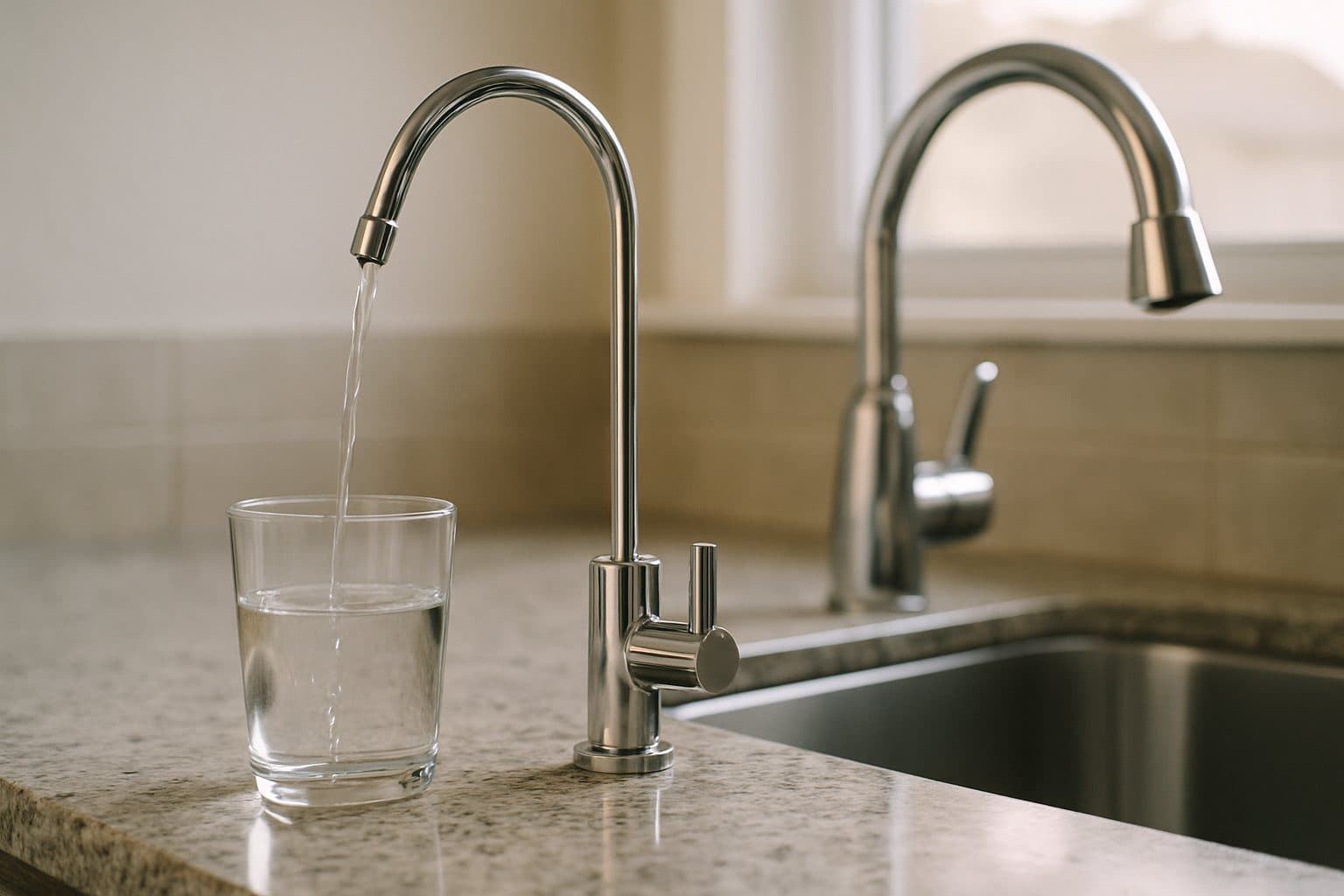
People install reverse osmosis, taste the result, and describe it the same way: flat, empty, like nothing. It is a real observation and the mechanism is simple.
Taste comes from what is dissolved in it
Water with nothing in it does not taste clean. It tastes like an absence.
What you normally taste is the dissolved mineral content — calcium, magnesium, bicarbonate, small amounts of sodium and sulfate. It is why water from different places tastes different, and why people have preferences between bottled brands that are chemically almost identical apart from mineral profile.
An RO membrane rejects dissolved solids as a class. It is not selecting the unpleasant ones; it cannot tell the difference. Nitrate, lead and PFAS go out — and so does everything that was giving the water character.
Which is also the point
That indiscriminate rejection is exactly why RO is the right tool for the contaminants nothing else touches. You cannot have the selectivity and the breadth at once.
So the flatness is not a defect. It is the same property, viewed from the tongue rather than the test report.
The fix
A remineralisation stage. A post-filter — commonly calcite or a blended mineral media — that the product water passes through after the membrane and before the faucet. It dissolves a small, controlled amount of mineral back in.
Two effects:
Taste returns. Not identical to your tap water, but recognisably water rather than an absence.
pH rises slightly. RO product water tends to sit a little on the acidic side; the mineral stage nudges it back toward neutral. On an under-sink system feeding a dedicated faucet and a short tubing run this is a minor consideration, but it is a real one.
Most systems can take a remineralisation cartridge as an addition rather than a replacement, so this is usually a small change rather than a new system.
The health argument, honestly
You will read that demineralised water is harmful, and you will read that mineral content in water is nutritionally significant. In a normal diet, minerals come overwhelmingly from food, and the amounts in drinking water are small by comparison.
So the honest reason to remineralise is taste. That is a perfectly good reason and does not need to be dressed up as a health claim.
Where RO belongs
At the point of use, feeding a drinking faucet and possibly the fridge line.
Whole-house RO is almost never right for a residential property: the reject flow scales with everything, demineralised water is mildly aggressive toward plumbing, and treating shower and laundry water to drinking standard buys nothing.
Treat the drinking line properly and the rest of the house to what it actually needs.
The free in-home test reads what is in your water first, which decides whether RO is the right tool at all — chlorine taste is a carbon question, not an RO one.