

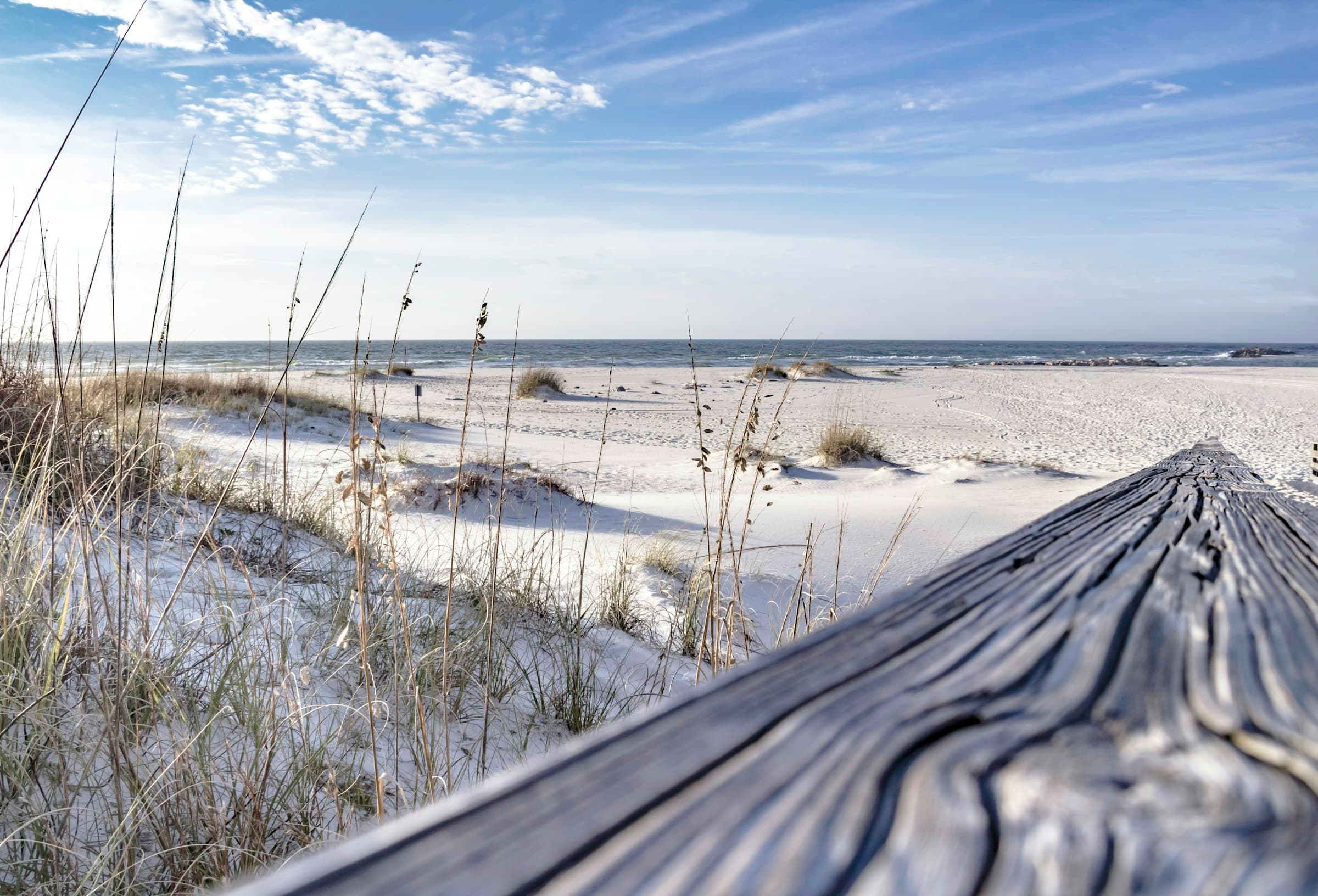
Orange Beach runs east from Gulf Shores along the Perdido Pass to the Florida line, with Ono Island as the gated island community south of the canal and the Wharf as the marina-and-retail destination on the north side. Bear Point, Cotton Bayou, and Terry Cove make up the bayside neighborhood band. Census data puts the median year built at 2000 across about 14,890 housing units, with just seven pre-1939 structures recorded — even younger and more uniformly post-Frederic than Gulf Shores.
The Orange Beach Water, Sewer & Fire Protection Authority serves about 17,800 residents from eight wells — two located on Ono Island itself and six on the mainland north of the canal. Published Consumer Confidence Reports have historically tested very well, which keeps the residential install conversation focused on hardness and the universal coastal preference for RO drinking water rather than on raw-source contaminant issues.
Salt-air corrosion is the local engineering constraint that separates Orange Beach installs from inland Baldwin work. Equipment housings facing the Gulf or Perdido Pass see accelerated wear on standard plated-steel fittings, so the local upgrade pattern is stainless or brass on every external connection. Ono Island specifically has tighter constraints — wells on the island serve the island, and equipment service runs across the gated access — which makes pre-season inspection routines a more deliberate part of the maintenance calendar than they are at typical mainland addresses.
The Perdido Pass jetties define the working geography in a way no other Baldwin shoreline does. Boats moving between Wolf Bay, Cotton Bayou, and the open Gulf all funnel through that single cut, and Ono Island sits on the south spit completely isolated from mainland Orange Beach except via the canal bridges. That geography routes condo-tower density to specific corridors — Perdido Beach Boulevard along the Gulf-front strip, Canal Road on the bayside — and leaves Bear Point and Terry Cove as low-rise pockets. Insurance carriers price the Gulf-front high-rise blocks differently from the canal-front mid-rise blocks, which shapes which buildings have HOA-funded equipment rooms and which leave it to individual unit owners. The Wharf district adds a commercial overlay — restaurants, the marina, the amphitheater — that operates on its own water-throughput rhythm distinct from any single-family neighborhood pattern in the Baldwin city set.