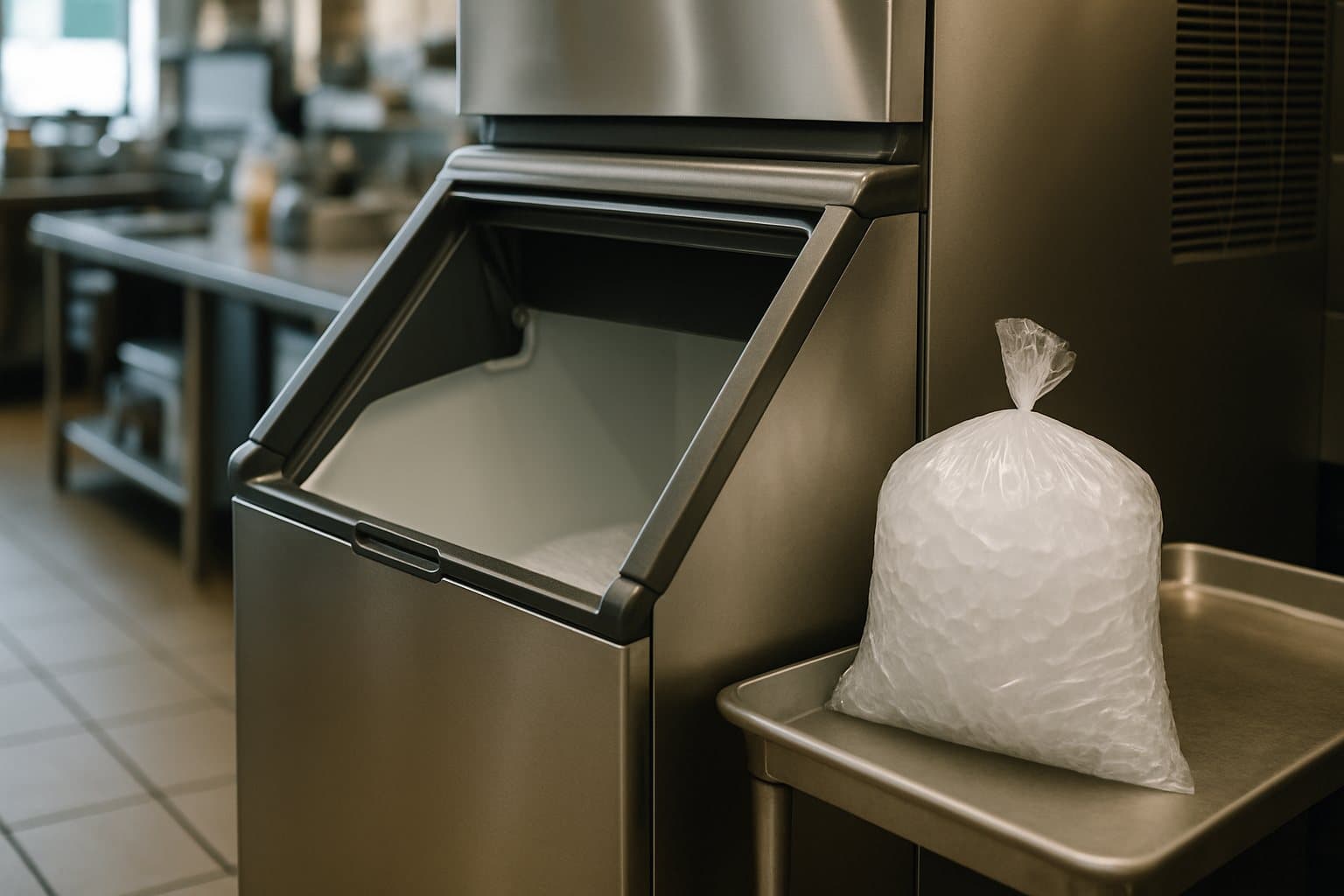
During a boil-water notice, the ice machine stops making ice for customers. Throw out ice made before the notice, switch the machine off or divert its output, and buy commercially made ice until the notice lifts. The same goes for fountain drinks, auto-fill coffee brewers and anything else plumbed to the water line. When the notice lifts, each of those appliances has to be flushed, cleaned and sanitized, and its filters changed, before it serves anyone again.
A notice on a Friday afternoon in tourist season is a bad moment to be working that out, so here is the whole sequence, with the rule behind each step.
Most of the recovery work falls on the water side of the kitchen. That is where a restaurant water treatment system either makes it quick or turns it into a scramble.
What does the food code require during a boil-water notice?
Alabama regulates restaurants under ADPH's food establishment rules, which adopt the Food Code. The code requires an operation to stop and notify the health department if an extended interruption of water service creates an imminent health hazard. It lists approved alternative water supplies, and it says ice must be made from drinking water.
The specifics, from Alabama's Chapter 420-3-22, which incorporates Chapters 1 to 8 of the 2013 FDA Food Code by reference:
- §8-404.11 Ceasing operations and reporting. A permit holder "shall immediately discontinue operations and notify the regulatory authority" if an imminent health hazard may exist because of an emergency, and "extended interruption of electrical or water service" is one of the examples listed. Parts of the establishment the hazard doesn't affect can keep operating.
- §8-404.12 Resumption of operations. If you did stop, you need the regulator's approval before reopening.
- §5-104.12 Alternative water supply. During a temporary interruption, water may come from commercially bottled drinking water, closed portable containers, an enclosed vehicle tank, an on-premises storage tank, or piping to an adjacent approved source.
- §3-202.16 Ice. Ice used as food or as a cooling medium "shall be made from drinking water."
Put together, ice from a machine plumbed to a line under a boil-water notice isn't ice made from water anyone can vouch for. Whether the whole kitchen has to close depends on the situation, which is a call for your county health department's food program. Ring them early.
Does the ice machine's filter make the water safe?
No. Ice machine filters reduce chlorine taste, particles and scale. None of that is disinfection. The CDC is explicit that tap water should be boiled even after it has been filtered. So a notice applies to the filter's output exactly as it does to an unfiltered tap, and the ice machine comes off service.
The same logic covers every filtered appliance in the building: the espresso machine, the combi oven, the fountain system, the RO unit on the coffee line. A filter is chosen for taste, scale or equipment protection. A boil-water notice is about pathogens, which is a different job.
What should a restaurant do during the notice?
Stop anything that serves tap water or ice to customers, and move food-contact water to an approved alternative. The CDC's guidance for businesses under a boil-water advisory covers ice, drinks and dishwashing in specific terms. Your county health department may add conditions of its own.
From the CDC's guidance for commercial settings during a boil-water advisory:
- Ice. Throw out ice made before the notice, stop making ice, and use commercially manufactured ice.
- Plumbed equipment. Stop using anything with a water line connection. The CDC's examples are post-mix beverage machines, spray misters, auto-fill coffee and tea makers, instant hot water heaters and ice machines.
- Handwashing. Use one of the approved alternatives: boiled water (a one-minute rolling boil), bottled or distilled water, or water hauled from an approved supply.
- Food already prepared. Throw out ready-to-eat food made with the water before the contamination was discovered.
- Dishwashing machines. The CDC gives time and temperature combinations for machine washing: 113°F for 20 minutes, 122°F for 5 minutes, or 162°F for 1 minute.
On the coast, notices are often drawn by road or pressure zone rather than by town. When Hurricane Sally hit in 2020, Riviera Utilities' notice covered customers between named county roads. Check the boundary before deciding it covers you, or that it doesn't.
What does a restaurant need to do when the notice lifts?
Flush, clean, change filters, then restart. The CDC's list for businesses: run cold taps and drinking fountains for at least five minutes, flush, clean and sanitize every appliance with a water connection following the manufacturer's instructions, change all point-of-entry and point-of-use filters, and regenerate softeners.
Worked through for a typical kitchen:
| Equipment | What the CDC list asks for |
|---|---|
| Faucets and drinking fountains | Run cold water for at least 5 minutes |
| Ice machine | Flush, clean and sanitize per the manufacturer, and change its filter |
| Fountain, coffee, tea, instant hot water | Flush, clean and sanitize per the manufacturer, and change their filters |
| Glass washers and dishwashers | Flush, clean and sanitize per the manufacturer |
| Softener | Run a regeneration cycle |
| Water heaters set below 113°F | Drain and refill |
| Buildings with water-holding reservoirs | Consult the facility engineer and health department about draining |
The filter line is where most kitchens get caught out. A notice that lifts at 3 p.m. means every cartridge on every appliance needs replacing before dinner service. That's easy if the spares are on the shelf and matched to each housing, and slow if they aren't. How long those cartridges last in normal service is a separate question, covered in how often to replace an ice machine water filter.
Our ice machine and coffee equipment filtration puts each appliance on its own matched cartridge set with the changes on a schedule. So after a notice, the swap is a known list rather than a hunt for part numbers.
Planning for the next one
You can't prevent a boil-water notice. What you can do is make sure the recovery doesn't depend on someone finding the right cartridge at 3 p.m. The FDA's 2022 model Food Code gives regulators a way to agree to continued operation during a water interruption under an approved written emergency operating plan. Alabama's rules adopt the 2013 edition, so ask your county health department whether it will consider a plan like that for your kitchen.
What sits on the water side:
- Know every water-connected appliance and where its filter is. Most kitchens have more than they think.
- Keep one set of spare cartridges for each housing.
- Keep a bypass or shut-off you can find for each appliance line.
- Know who changes the filters when the notice lifts.
If your treatment was put together one appliance and one vendor at a time, the whole back-of-house can be designed together. We look at that in the best water filtration for a restaurant. For a view of the water as it arrives at your building now, book the free water test. It's a screen for hardness, chlorine, total dissolved solids and a soap test, read on site. It is not a safety test, and it doesn't replace your utility's all-clear or your health department's.
General guidance, not legal advice or a substitute for your county health department. The food code and the notice govern. When they differ from this post, follow them.