

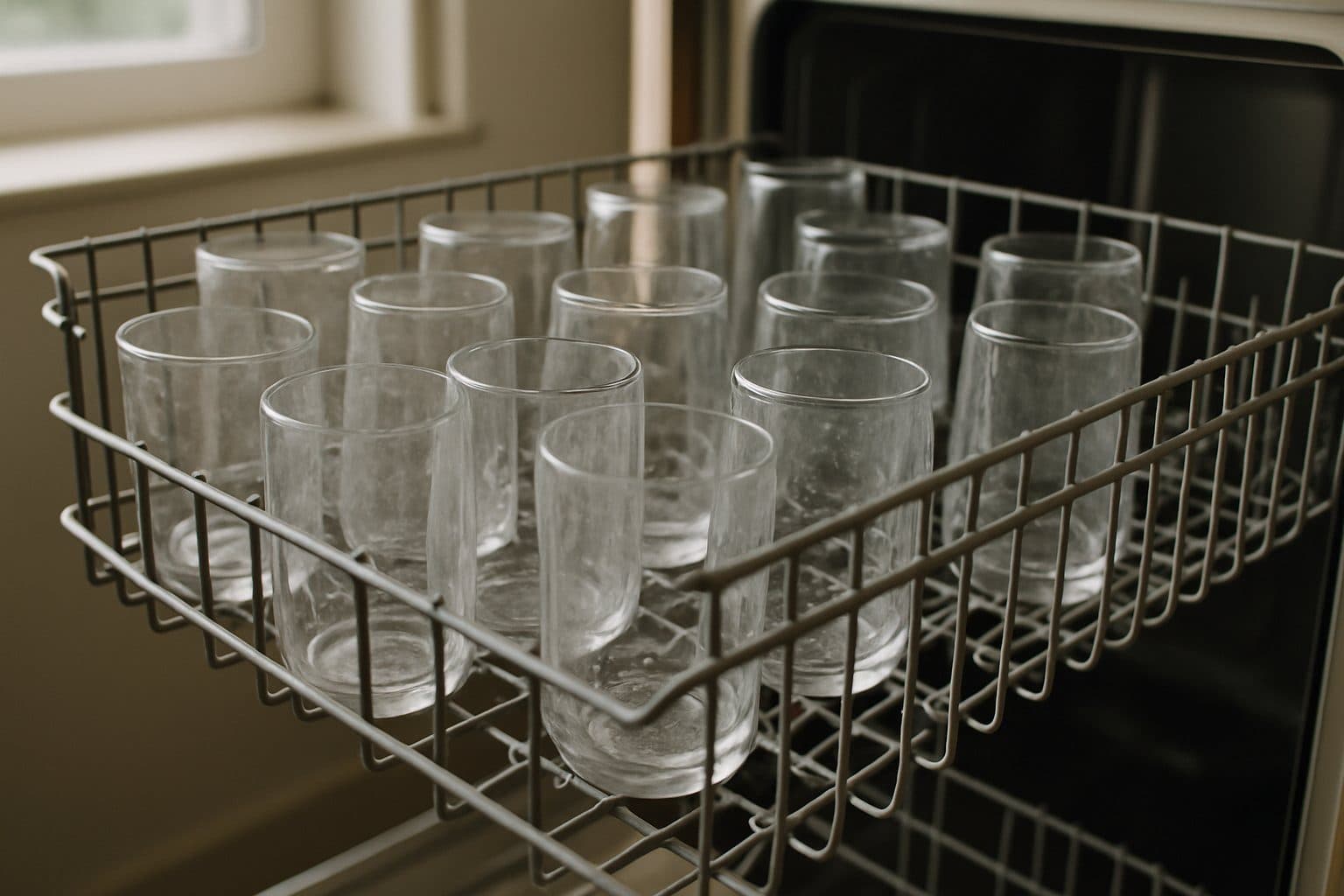
Spots on glassware are one of the most common hard-water complaints and one of the most commonly misdiagnosed, because two opposite problems produce a similar appearance.
Getting it backwards is expensive — one of them ruins glassware permanently.
The vinegar test
Take a spotted glass. Soak it in white vinegar for about fifteen minutes. Rinse.
Spots gone → mineral deposits. The vinegar dissolved them. This is a hard water problem, and it is fixable.
No change → etching. The vinegar had nothing to dissolve because the damage is in the glass, not on it. This is permanent, and the cause is usually the opposite of what people assume.
Ten minutes, no equipment, and it decides everything that follows.
If it is mineral deposits
Water containing dissolved calcium and magnesium dries on the surface and leaves the minerals behind. More mineral, more visible residue — worst on the final rinse, when droplets sit and evaporate rather than being wiped.
What helps:
- A rinse aid, which lowers surface tension so water sheets off rather than beading. Genuinely effective for this specific problem.
- A hotter final rinse, so less water is left standing.
- Softening, which removes the cause rather than managing it.
If it is etching
Etching is microscopic damage to the glass surface, and the usual causes are uncomfortable for anyone selling water treatment:
- Very soft water combined with too much detergent. Detergent is formulated assuming some hardness to work against. In soft water the same dose is a large overdose, and the excess is aggressive toward glass.
- Excessively hot wash cycles, particularly on thin or older glassware.
- Long-term cumulative exposure, which is why it appears on the glasses used daily and not the ones at the back of the cupboard.
The fix, if you have a softener, is usually much less detergent — often substantially less than the packaging suggests, because the packaging assumes average water. This is the same adjustment that catches people out with soap in the shower.
The local wrinkle
Groundwater medians in Mobile and Baldwin counties run low by national standards, so the reflexive "you have hard water" diagnosis is less reliable here than the volume of national content on the subject would suggest.
Which is another argument for the vinegar test before the sales visit. If your spots do not dissolve, more softening is the wrong direction entirely.
When it is neither
Cloudiness that appears suddenly across everything, including plastics, usually points at the dishwasher — a blocked spray arm, a failed heating element, or a detergent dispenser not opening. Water chemistry rarely changes overnight.
If the vinegar test says minerals, the free in-home test reads your actual hardness, which decides whether a softener is worth it or whether a rinse aid was always the proportionate answer.