

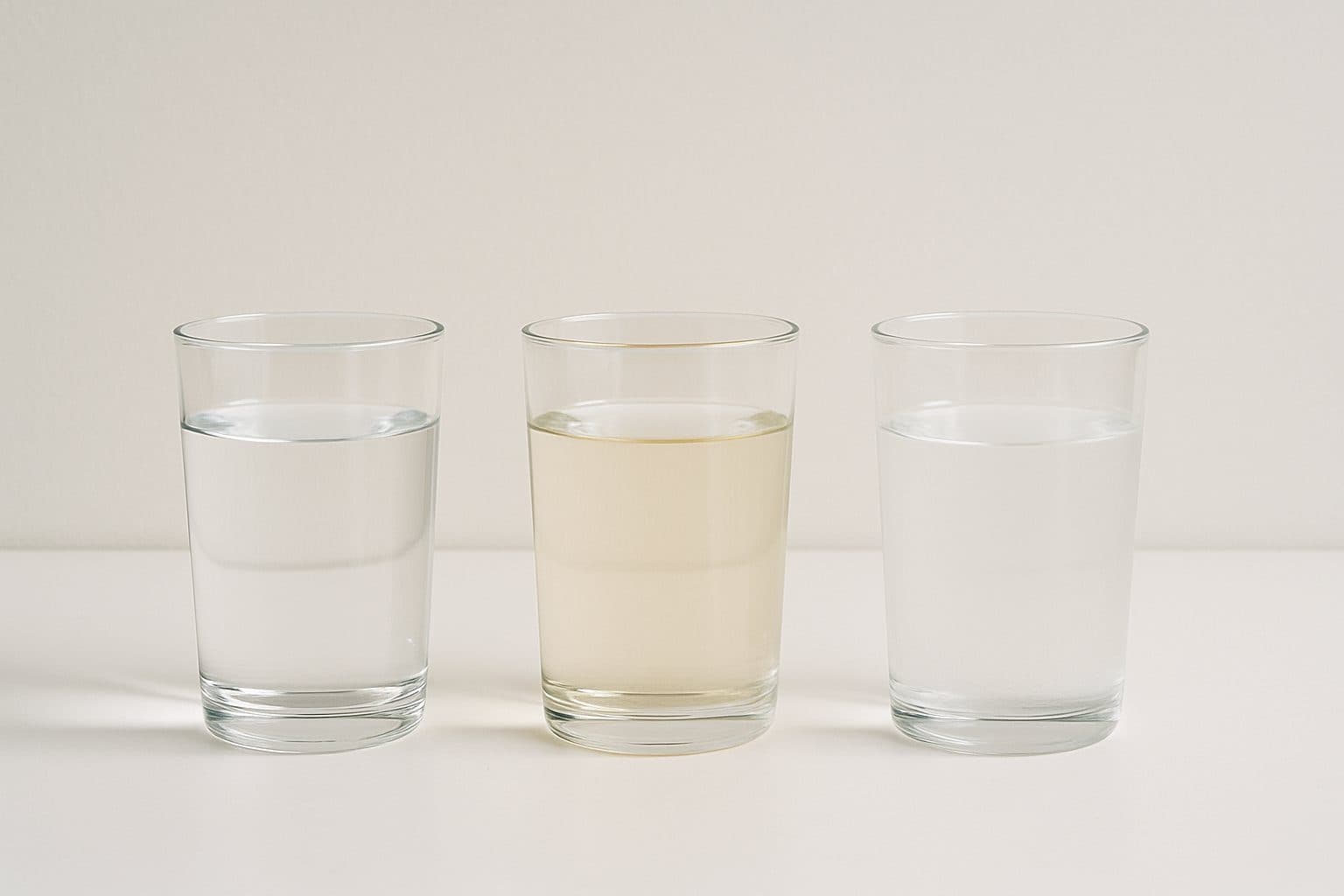
There are two sets of federal drinking water standards. One is law. The other is advice — and it covers almost everything people actually notice about their water.
Primary versus secondary
Primary standards are enforceable. They cover contaminants with health effects — bacteria, nitrate, arsenic, lead, disinfection by-products — and a system exceeding one is in violation with obligations that follow.
Secondary standards (SMCLs) are not federally enforceable. They cover contaminants that affect taste, odour, colour, staining and general acceptability. EPA publishes them as guidance; states may adopt them as enforceable if they wish.
A system exceeding a secondary standard is not in violation of anything.
The list, and why it is the interesting one
Secondary standards cover iron, manganese, total dissolved solids, chloride, sulfate, zinc, aluminium, silver, fluoride at the aesthetic threshold, colour, odour, foaming agents, and pH.
Read that list and notice what it is: the complaints. Orange stains. Metallic taste. Black specks. Cloudy water. Water that tastes "off." Almost nothing anyone ever calls about is a primary standard problem.
Why it matters locally
Iron has a secondary standard of 0.3 mg/L, and USGS sampling finds 70% of Mobile County and 76% of Baldwin County groundwater sites above it.
So a large majority of local wells exceed a federal standard that nobody enforces and that says nothing about health. What it does mean is orange staining on laundry and fixtures, a metallic taste, and a genuine obstacle to UV disinfection working properly, since the same 0.3 mg/L figure is the NSF pretreatment threshold.
pH has a secondary range of 6.5 to 8.5. Local groundwater medians are 6.69 in Mobile and 6.88 in Baldwin — inside the range, but close enough to the bottom that plenty of individual wells sit below it. Water under 6.5 is actively dissolving copper plumbing, which is a real cost that arrives as pinhole leaks years later.
That is the honest tension in the category. "Aesthetic" is EPA's classification of the standard, not a description of the consequences.
How this gets misused, in both directions
"It exceeds an EPA standard" — technically true of most local wells for iron, and it implies a violation that does not exist.
"It meets all EPA standards" — often said about water that exceeds several secondary ones, because the speaker means primary standards and the listener hears all of them.
Both statements get made in sales conversations. The defence is asking which standard, and whether it is enforceable.
What to do with a secondary exceedance
Decide whether it bothers you, and whether it has a downstream cost.
Iron that stains laundry has a cost. Low pH eating copper has a large one that arrives late. Dissolved solids slightly above 500 with no taste complaint may have no cost at all.
There is no obligation attached to any of it, which means the decision is genuinely yours rather than something a regulation makes for you.
The free in-home test reads hardness, chlorine and TDS and runs a soap test — TDS is secondary-standard territory, and together they decide what, if anything, is worth doing. pH is not on the panel; for that, a laboratory result is the number to get.