A boil-water notice means your utility can no longer vouch for the water in part of its system, usually because pressure dropped or a main broke. Until the notice lifts, water you drink, cook with, brush your teeth with or make ice from should be boiled for one minute or come from a sealed bottle. Most other household uses can continue.
On this coast the notices tend to arrive with hurricanes, which means they come at the same moment as power cuts, flooded roads and a lot of other decisions. This post covers the notice itself: what it means, how to boil and disinfect water correctly, what is still fine to use, and the steps to take on the day it is lifted.
That last part is where the filters and treatment equipment in your house come in, and it is the part of storm recovery we handle through our post-storm water response.
What does a boil-water notice actually mean?
It means the utility has lost confidence that water in a defined area is free of bacteria, usually after a drop in system pressure. When pressure in the mains falls low enough, water outside a pipe can be drawn in through cracks, joints or cross-connections. The notice holds until follow-up samples come back clean.
EPA's guidance on loss of pressure in drinking water systems describes the mechanism plainly: when pressure is lost, water can move from outside the pipe to the inside, and a collapsing water column can create a vacuum that pulls contaminants in through a cross-connection. Nothing needs to be detected in the water for a notice to be issued. Many notices are precautionary, and that is the point of them.
Hurricanes produce exactly those conditions: pumps lose power, trees pull up service lines, and heavy rain works on everything underground. When Hurricane Sally came ashore in September 2020, Riviera Utilities issued a boil-water notice on September 16, citing "excessive rain and loss of power". It covered customers between County Road 20 and County Road 24, and from County Road 65 to the Foley Beach Express, and it was stated to run through September 25.
Notice how it was drawn: by county road, not by town. Notices here are often scoped to a pressure zone or a stretch of main, so a neighbour a mile away may not be under the same one. Read the boundary in your utility's notice rather than the headline.
How do you boil water correctly during a notice?
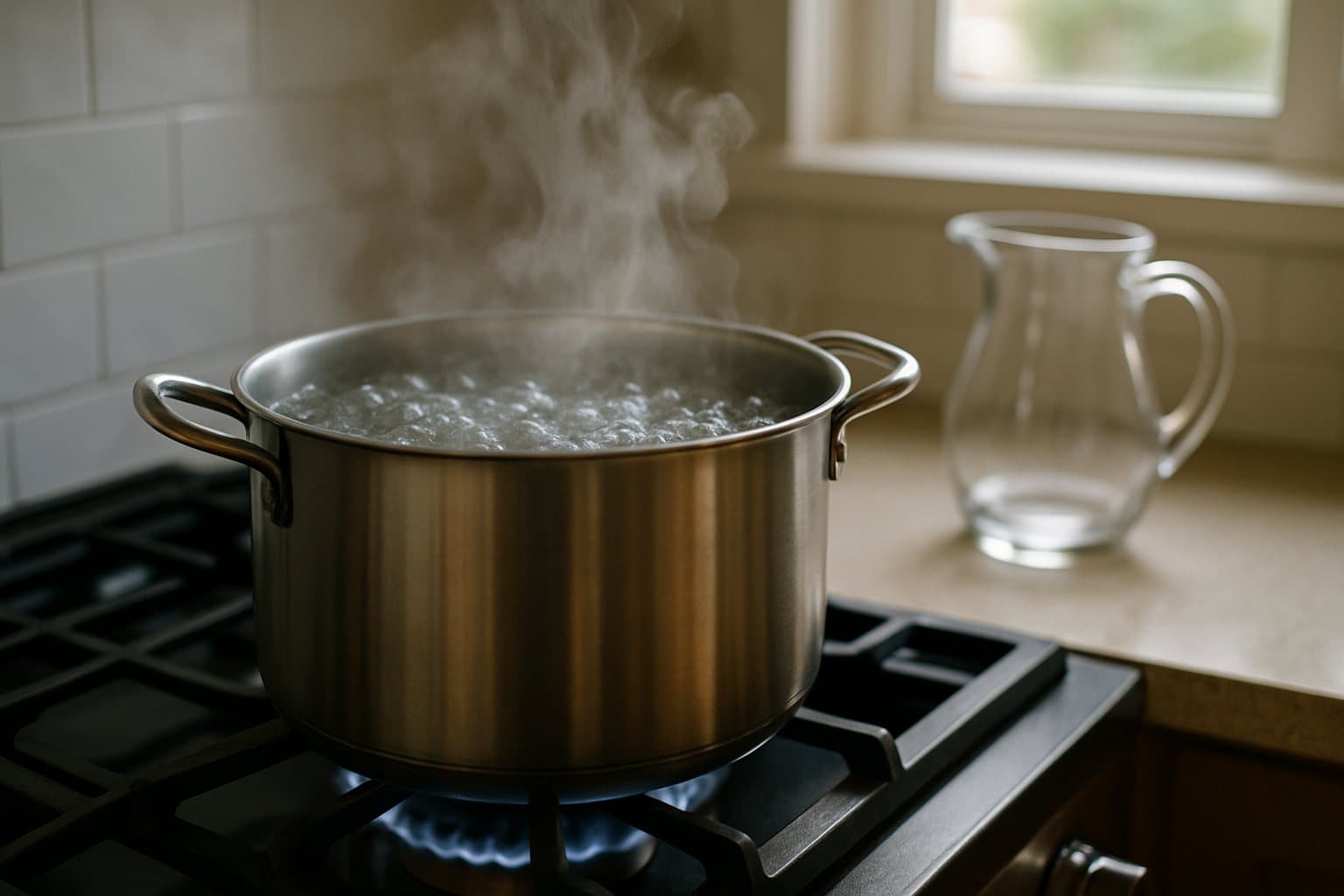
Bring clear water to a full rolling boil and hold it there for one minute, then let it cool in a clean, covered container. That is the CDC's instruction, and it matches the one-minute boil the Alabama Department of Public Health gave after Tropical Storm Zeta. The longer three-minute boil is for high altitude only.
If the water is cloudy, let it settle and pour it through a clean cloth or coffee filter first. Boil what comes through.
If you cannot boil because the power is out and the stove is electric, EPA's emergency disinfection guidance gives a bleach method. Use plain, unscented household bleach and check the percentage on the label:
| Amount of clear water | 6% bleach | 8.25% bleach |
|---|---|---|
| 1 quart | 2 drops | 2 drops |
| 1 gallon | 8 drops | 6 drops |
Stir, then let it stand for 30 minutes. The water should have a slight chlorine smell. Keep a clean medicine dropper with your storm supplies, because counting drops from a gallon jug isn't realistic.
What is still safe to use during a notice?
Most non-drinking uses can continue. The CDC says handwashing with tap water and soap is usually fine, and you can shower if you avoid swallowing water. Anything that goes into a mouth is different: drinking, cooking, brushing teeth, baby formula, pet water and ice all need boiled or bottled water.
Working through the house, based on the CDC's advisory guidance:
- Drinking, cooking, coffee, baby formula: boiled or bottled water only. The CDC recommends ready-to-use formula where you can get it.
- Brushing teeth: boiled or bottled water.
- Showers and baths: fine, but keep water out of mouths. The CDC suggests sponge baths for babies and young children.
- Handwashing: usually fine with tap water and soap. Follow your utility or health department if the notice says otherwise.
- Dishwasher: generally safe if it has a sanitizing cycle or a final rinse of at least 150°F.
- Pets: bottled water or boiled water that has cooled.
- Refrigerator water and ice dispensers: off for the duration. They draw from the same line as your taps.
- Houseplants and gardens: tap water is fine.
Does a home filter or RO system make tap water safe during a notice?
No, and this is the mistake we'd most like to prevent. The CDC tells people to boil tap water even when it has been through a home filter or filtering pitcher. Carbon filters, softeners and refrigerator cartridges are not built or rated to disinfect, so a boil-water notice applies to their output as well.
That goes for reverse osmosis too. An under-sink RO system is a very fine barrier and it does real work every other week of the year, but a notice is a disinfection question, and the answer is to boil or use bottled water until the utility clears the system. We sell RO, and we'd still tell you the same.
If a long notice leaves you wondering what you actually spend on bottled water in a normal year, that's a separate question, and our bottled water vs reverse osmosis calculator works it out from your own numbers. Just don't expect it to change what you do while a notice is in force.
What should you do when the notice is lifted?
Flush first, then deal with anything that stored or treated water during the notice. The CDC's checklist for when an advisory ends asks for five minutes of cold water at each faucet, new filter cartridges at every point of use and entry, a softener regeneration, and a clean-out of any appliance that holds water.
In order, adapted from the CDC's guidance for when a boil-water advisory is over (written for businesses, but the plumbing is the same at home):
- Flush the taps. Run each cold-water faucet for at least 5 minutes.
- Empty the ice maker. Throw out any ice made before or during the notice and let the machine make fresh ice.
- Change the filter cartridges. The CDC says to change all point-of-entry and point-of-use filters, including the ones inside appliances. That means the refrigerator filter, under-sink cartridges and any whole-house carbon filter. They were sitting in water nobody could vouch for.
- Regenerate the softener. Run a manual regeneration cycle so the resin bed is flushed with fresh brine and clean water.
- Check the water heater setting. The CDC calls for draining and refilling water heaters set below 113°F. Most homes run hotter than that, but it's worth a look.
If the storm also cut the power, the softener and any UV system have their own recovery steps. We cover those in what softeners and UV systems need after an outage.
If your water comes from a private well
A boil-water notice from a utility doesn't apply to a private well, and no notice will ever tell you when a well is safe again. If flood water covered your wellhead, ADPH's position is that the well should be assumed contaminated until a test says otherwise. That's a separate process, covered in your well was under flood water.
After the storm
Once the notice has lifted and the taps have been flushed, most houses are back to normal. The exceptions are homes with treatment equipment that sat through the outage, and wells that took on flood water.
For those, our post-storm response covers the equipment side: fouled cartridges swapped, sediment flushed out of the lines, UV systems inspected. We work same-day during business hours, Monday to Friday, on (251) 292-3888.
If you just want to know what your water is doing now the storm has passed, book the free in-home water test. It's a screen for hardness, chlorine, total dissolved solids and a soap test, read at your tap. It won't tell you whether water is safe to drink after a notice. That is your utility's job, or a state-certified laboratory's if you're on a well.
General guidance, not a substitute for instructions from your water utility or the Alabama Department of Public Health. When a notice and this post disagree, follow the notice.