

Metallic taste is one of the more diagnosable water complaints, because there are really only two likely candidates and a simple test separates them.
The morning test
Run the tap for thirty seconds and taste again.
Taste clears after flushing — the metal is coming from your plumbing. Water sitting in the pipes overnight had hours of contact time to dissolve it; fresh water from the main has not. This points at copper.
Taste is the same after flushing — the metal is arriving from the source. This points at iron.
That one observation does most of the work.
Candidate one: copper from your own pipes
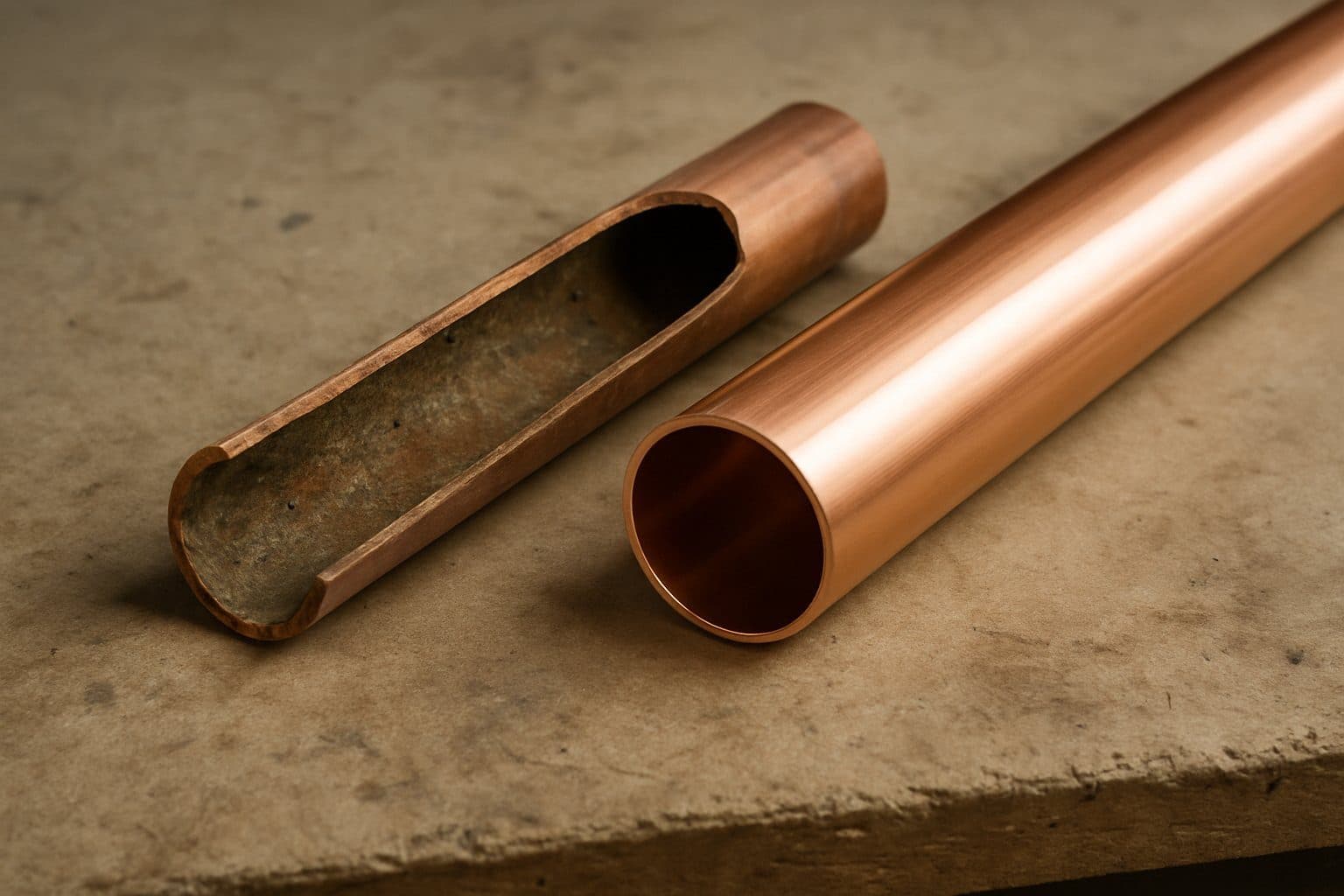
Copper is dissolved out of plumbing by acidic water, and it is detectable by taste at concentrations well below the EPA action level of 1.3 mg/L. So tasting it does not mean you have exceeded anything — it means the process is happening.
The confirming symptom is visual: blue-green staining around drains and fixtures, which is deposited copper left behind as water evaporates.
This is a live issue locally. Groundwater here runs mildly acidic — median pH 6.69 in Mobile County and 6.88 in Baldwin — because the sand-and-gravel formation these wells draw from carries very little carbonate to buffer against.
The fix is not a filter. It is raising pH with an acid neutraliser, so the water stops attacking the pipe. Filtering at the tap leaves the pipe between the filter and your glass doing exactly what it was doing.
Candidate two: iron from the source
Iron produces a metallic taste, orange-brown staining on fixtures and laundry, and sometimes a rusty tint in the first draw.
It is extremely common in local groundwater — USGS sampling finds 70% of Mobile County and 76% of Baldwin County sites above the iron secondary standard of 0.3 mg/L. That is a secondary standard, meaning nuisance rather than health.
We do not install dedicated iron treatment, so if the answer is iron, we will say so and point you elsewhere. It also has a knock-on effect on UV disinfection that is worth knowing about before anyone quotes you a system.
Less common, worth ruling out
A water heater anode rod nearing the end of its life can contribute taste, and it presents on the hot side only. If the taste is hot-only, start there.
New plumbing can taste metallic for a few weeks as it passivates. This resolves on its own.
Lead does not reliably produce a taste, which is exactly why it is dangerous and why it is tested for rather than sensed. If the house is old enough for lead to be a question, that is a specific test, not a tasting exercise.
Getting to an answer
Two numbers settle almost every case: pH, which tells you whether the water is aggressive toward your plumbing, and iron, which tells you whether it is arriving that way.
Guessing between them is expensive, because the two answers point at completely different equipment.
pH and iron are not on the free in-home test, which covers hardness, chlorine, TDS and a soap test. A laboratory result for pH and iron is what tells you which conversation you are actually having.