

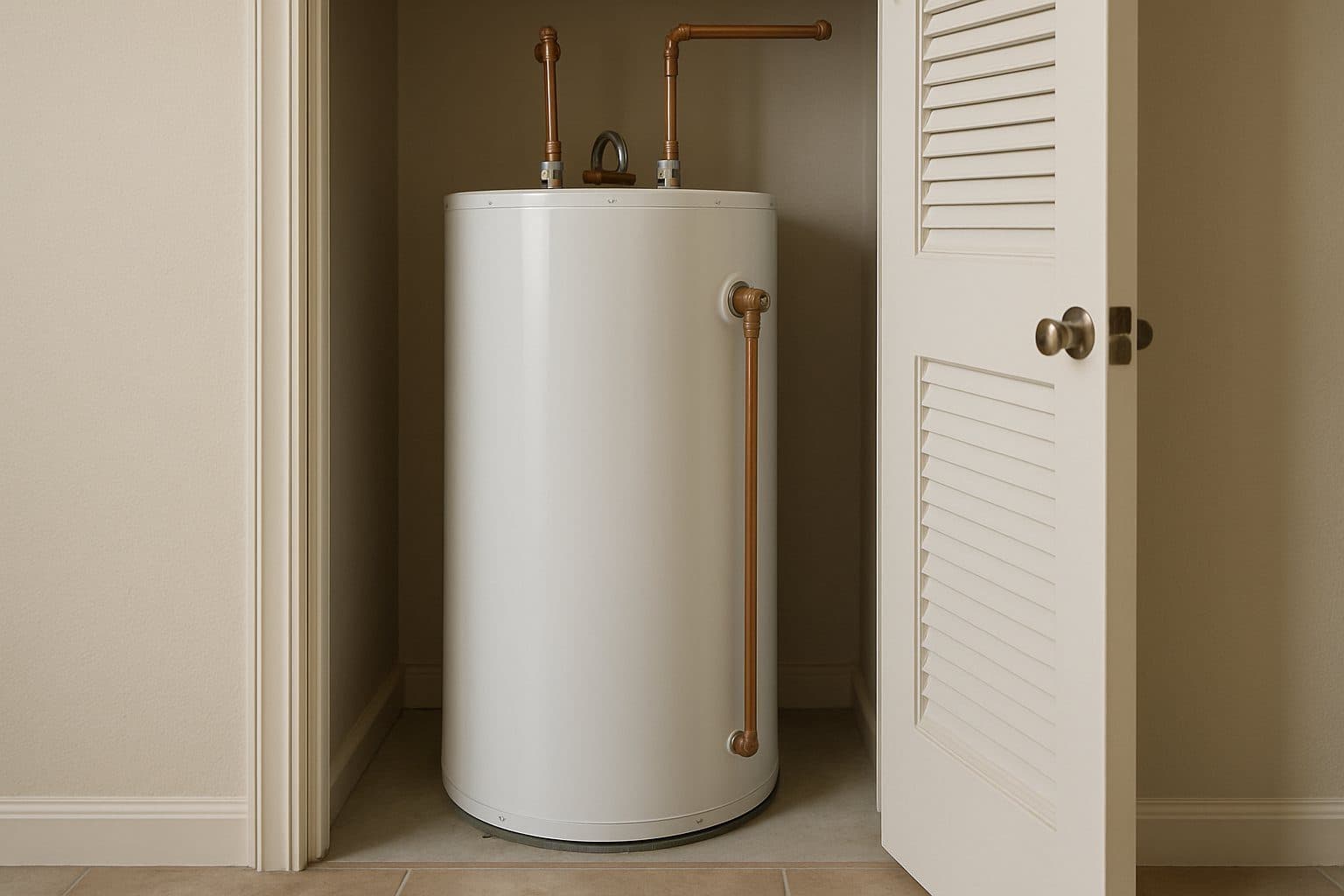
The single most useful diagnostic for any water smell is to check whether it is on the hot side, the cold side, or both. Hot-only narrows it dramatically.
Hot only
The smell is being produced in the water heater, not arriving in the supply.
The usual mechanism involves two things that are both meant to be there. Water heaters contain a sacrificial anode rod — usually magnesium or aluminium — which corrodes preferentially so that the steel tank does not. Tanks also frequently harbour sulfate-reducing bacteria, which are harmless in themselves and live happily in the warm, low-oxygen environment.
Together they produce hydrogen sulfide, which smells of rotten eggs at concentrations far below anything harmful. The nose is extremely good at detecting it.
What tends to bring it on:
- A tank that has sat unused, such as a holiday home or a guest bathroom
- A lowered thermostat setting, which suits the bacteria better
- Well water carrying sulfate, which gives them more to work with
This is a plumber's job. Anode rod replacement, tank flushing and heater service are not our work and we do not do them.
Both hot and cold
The smell is arriving in the supply, and the cause is upstream of the house.
On a private well, common candidates are naturally occurring sulfur compounds in the formation, or organic matter reaching the well. On city water it is more likely to be disinfection-related — chlorine, chloramine, or by-products.
Worth noting honestly: sulfur and hydrogen sulfide removal is not something we install. If that is what your water is doing, we will identify it and point you to someone who treats it.
Cold only
Unusual, and worth investigating rather than living with. A cold-only smell can point at something in the cold line specifically, or at a change in the supply.
If it is new, persistent, and you are on a well, it is worth a bacteriological test — the county health department handles that.
The two-minute version
- Run the cold tap for thirty seconds. Smell it.
- Run the hot tap. Smell it.
- Try a tap in a different part of the house, to distinguish a whole-house issue from a single-fixture one.
- Check whether a rarely used tap smells worse — stagnation in a branch line is its own small problem.
That sequence tells you who to call, which is most of the value.
Where we fit
We read what is in the water and treat what we treat. On this particular complaint our most useful contribution is often the diagnosis rather than the work: establishing whether the smell is your heater or your supply, so you are not paying a plumber to investigate a well problem or vice versa.
The free in-home test is the straightforward way to settle which side of that line you are on.