

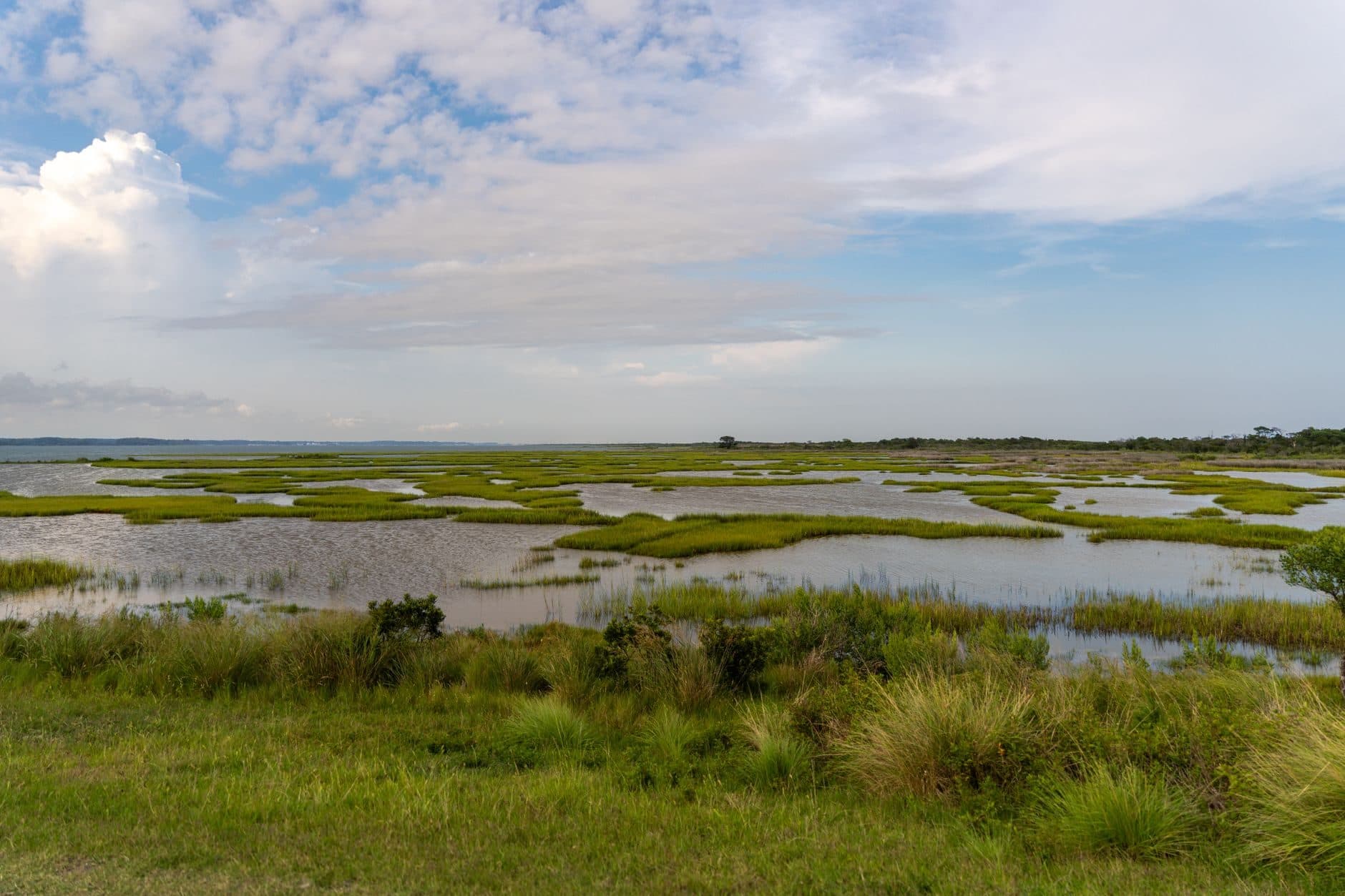
Wells here are not deep in the way wells elsewhere are deep, and near the shore the water table can be remarkably close to the surface — in places within a few feet of sea level.
That proximity is the single most useful thing to understand about a coastal well.
Why it sits so high
The coastal plain is low, flat, and built of permeable sand and gravel. Water moves through it readily, rainfall recharges it quickly, and the whole system grades toward the Gulf. There is no thick confining layer holding a deep pressurised aquifer down.
The consequence is a water table that is shallow, responsive, and seasonal.
What a shallow water table changes
Less material between the surface and your water. Soil and sediment provide natural filtration and, more importantly, time. Thin that layer and both are reduced — which is why shallow wells are advised to test more often.
Fast response to rain. In permeable ground recharge is quick. If your water changes noticeably after heavy rain — taste, clarity, smell — that is a recognised pattern, not a coincidence, and it argues for testing after rain rather than on a dry week when everything looks fine.
Wellhead vulnerability. If the water table can rise toward the surface and the ground around the wellhead pools, the distance between standing surface water and your supply becomes very short. Casing that extends far enough, an intact cap, and ground sloping away from the well matter more here than in a place with fifty feet of clay overhead.
Storm exposure. This is a hurricane coast. The risk to a private supply during a flood is inundation at the wellhead rather than a change in what the formation delivers — and a well that has been submerged should be tested before it is trusted, regardless of how the water looks.
Saltwater intrusion
In coastal aquifers there is a boundary between fresh groundwater and denser salt water beneath and seaward of it. Heavy pumping can draw that interface inland or upward.
For an individual homeowner this is usually a slow-moving question rather than a sudden one, and the signal is a rising chloride trend over time. Which is a practical argument for keeping past test results rather than discarding them — one reading tells you a value, three readings tell you a direction.
What it does not mean
A shallow water table is a risk factor, not a verdict. Plenty of shallow wells produce good water for decades.
Construction frequently matters more than depth. A properly cased and grouted shallower well can be better protected than a deeper one with a compromised seal, because water travels down the outside of a casing far more readily than through the formation.
The practical takeaways
- Test annually for bacteria, and after heavy rain or flooding
- Keep the ground around the wellhead sloping away, and the cap sealed
- Keep your results, so you have a trend rather than a snapshot
- Know your septic setback
More on private wells in coastal Alabama and the formation they draw from. The free test gives you the chemistry; bacteria goes to your county health department.