

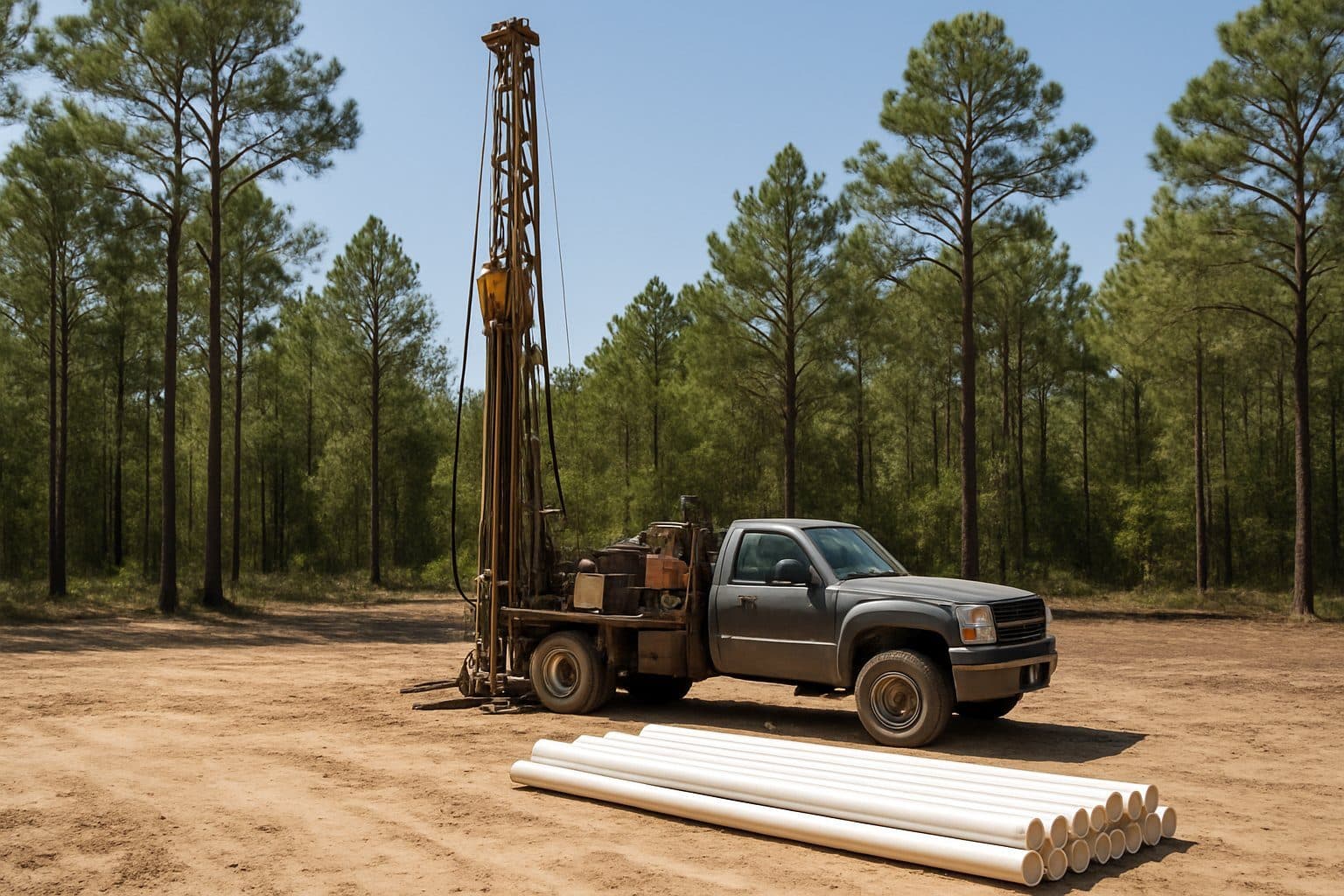
This is a page about a question we are asked and deliberately do not answer with a number.
We do not drill wells
Water Filtration 1 does not drill, deepen, case or construct wells, and we do not service the drilling side of a well system.
What we do is read water and treat what is treatable: whole-house filtration, pH correction, and pump, tank and pressure-switch work on an existing well.
So if you need a well drilled, you want a licensed well driller, and we would rather say so than publish a cost estimate for work we do not perform.
Why we will not publish a figure
Because the honest range is wide enough to be useless, and a number on a website gets treated as authoritative regardless of how it is hedged.
Drilling is priced primarily per foot, and depth is site-specific. Two properties on the same road can need materially different depths depending on where the productive zone sits and how the geology behaves underneath.
A figure from a national article, or from a company in a different state with different rock, tells you nothing useful about your lot.
What actually drives the number
Worth knowing before you collect quotes, so you can compare them properly:
Depth, which dominates everything.
Geology — what the drill has to pass through, and whether it changes technique partway.
Casing — how much, of what, and how it is grouted. This is not the place to economise; casing and grouting are what keep surface water from tracking down the outside of the hole, which is the thing that most often causes a bacteria problem later.
Access and travel — whether a rig can reach the site easily.
What is included. This is where quotes diverge most. A hole in the ground is not a water supply. Pump, pressure tank, electrical connection, plumbing to the house and a pitless adapter may or may not be in the price.
Questions worth asking a driller
- What depth do you expect, and what happens if you have to go deeper — is that at the same per-foot rate?
- What is included beyond the borehole itself?
- What will the completion record show, and will I get a copy? (You want this. It is the document that answers every future question about the well.)
- What guarantee is there on yield?
- What setbacks apply on my lot, particularly relative to the septic system?
Where we pick up
Once the well exists and is producing, the water it produces is our part.
Locally that usually means mildly acidic water — median pH 6.69 in Mobile County and 6.88 in Baldwin — because the formation is quartz sand and gravel with little carbonate to buffer against. Acid neutralisation is a common first step here rather than an exotic one.
And frequently iron, which we do not treat and will tell you about rather than work around.
More on private wells in coastal Alabama. When the well is in, the free test tells you what it is actually producing.